
Weed Wisdom: Remembering Yourself
Weeds get a bad rap. They're pulled, sprayed, and cursed at, treated as something to overcome rather than something to get to know. Many of the plants we work hardest to get rid of are among the most nutritious, medicinal, and generous plants on earth. This series is a case for looking twice. The weed in your yard might just know something you don't.
It was one of those days. The kind where your focus is gone, your patience is thinner than it should be, and the smallest irritation feels enormous. I felt antsy and frustrated, so I went for a walk. I headed to the nature trail near my house.
Halfway through my walk, my phone went off. Then again. And again. A tornado of messages (and someone else's stress) landing directly in my nervous system. I stood there on the trail, staring at my screen, unable to locate my own thoughts underneath all the noise.
I looked up.
Stretching along both sides of the path, yards in every direction, was an enormous patch of mugwort, gently swaying in the breeze, almost beckoning me. The undersides of her leaves caught the light as they moved, revealing her distinctive silvery shimmer.
I laughed out loud and put my phone in my pocket. Of course it was mugwort.
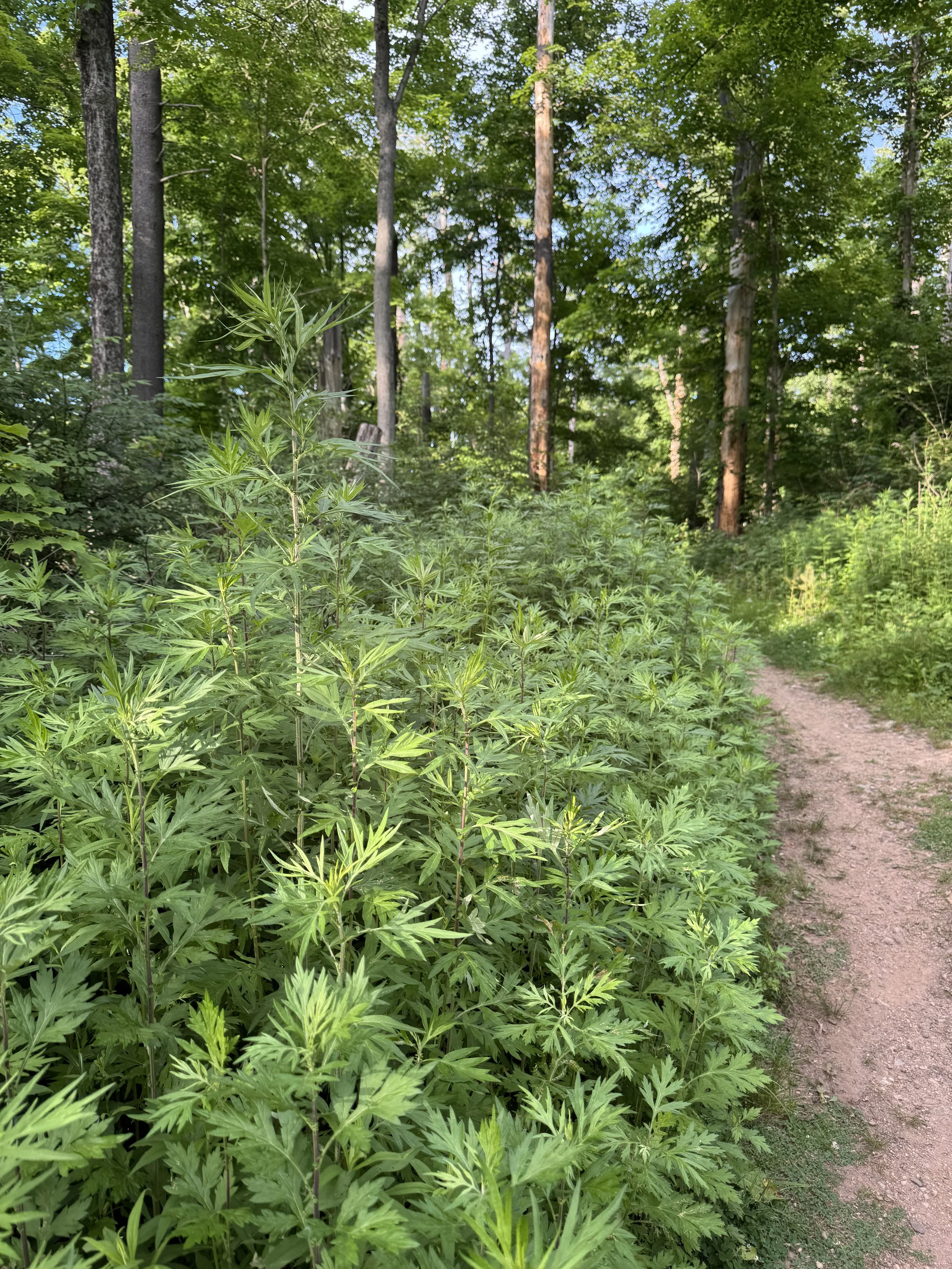
Once you know mugwort, you'll see her everywhere. Along hiking trails, at the edges of city sidewalks, in vacant lots and roadsides; the often overlooked places most people walk past without a second glance. Artemisia vulgaris is a perennial that grows two to five feet tall, with deeply lobed leaves that are dark green on top and covered in fine silver hairs beneath. That silvery underside is her signature.
She has been called the mother of herbs since the Middle Ages, used by women across cultures and centuries in ancient Greece, China, Europe, and indigenous traditions around the world. She is named for Artemis, the Greek goddess of the moon and the hunt, patron of pregnant women and new mothers.
Mugwort is a bitter, aromatic herb with a warming, drying energy with affinities for the female reproductive, digestive, and nervous systems. She is best known as an emmenagogue, meaning she stimulates and regulates menstruation, useful for both absent, delayed or painful periods. She increases blood flow to the reproductive organs, relaxes a tense uterus, and through her bitter tonic properties encourages healthy flow.
A sluggish liver can contribute to PMS symptoms because the liver is responsible for breaking down reproductive hormones. When it can't do that efficiently, hormones stagnate, moods swing, and the whole system just feels off. Mugwort's bitter and aromatic qualities tend to a congested liver, and combined with her nervine sedative action, she addresses the full constellation of PMS complaints from the inside out.
She is the herb for the raging, spiraling PMS walk through the woods where you're trying to remember what you actually feel and where you end and everyone else begins. Which brings me back to that…
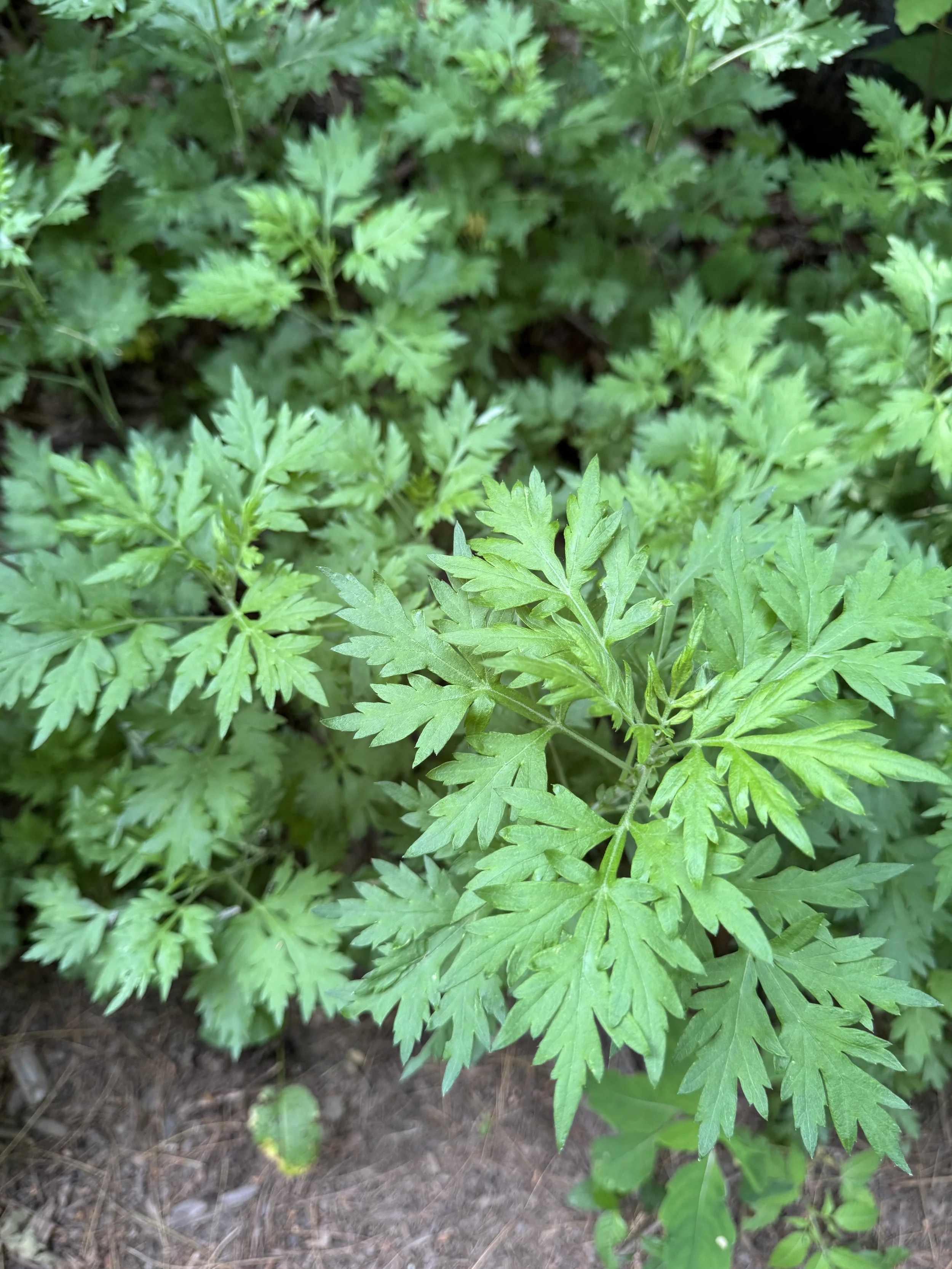
As someone easily overwhelmed by other people's energy, I know what it feels like when the sensory gates are too open. I know what it feels like to lose yourself under the weight of everyone else's urgency. That's exactly what mugwort addresses. She quiets the noise and helps you discern what's yours and remember who you are underneath all of it. She sharpens the channel between what you know on the surface and what you know much deeper down. She doesn't give you an answer. She helps you hear your own.
Mugwort helps regulate the inner landscape. She is associated with sharpening intuition and clearing the channel between what you know on the surface and what you know much deeper down. She is also famous for her relationship with the dreaming mind, for bringing light to the parts of ourselves we've tucked away and forgotten to tend to. A sachet tucked under a pillow is a traditional preparation for vivid, sometimes lucid dreams.
Internally, mugwort is commonly taken as an infusion or as a tincture made from fresh leaves in higher proof alcohol to capture her volatile oils. She is not an herb for large doses or prolonged daily use, and should be avoided internally during pregnancy unless working with a qualified practitioner.
For those who prefer to stick to external or energetic use, mugwort shines just as brightly here. A ritual bath to support menstruation, a topical oil for cramps, a sachet under the pillow for dreaming, a bundle for burning.
I stood by that patch along the trail for a while; long enough to separate from what had just come flooding in through my phone. Long enough to remember where I ended and everything else began.
Mugwort doesn't demand your attention the way nettle does. She doesn't sting. She shows up exactly when you've lost the thread back to yourself, silver in the light, unhurried and waiting for you to notice.
