
Notes from the Farm: Part Three
This is the third installment in a series following one student's journey through the Level I Herbal Apprenticeship at the Boston School of Herbal Studies. Each month, we'll share a dispatch from the farm: what we're learning, what's growing, and what the plants have to say. Follow along. To learn more about the apprenticeship, visit bostonherbalstudies.com/education.
Our third session arrived in the thick of summer heat. This time around, it was on the Gemini New Moon: the beginning of a brand new cycle, led by the planet of intellect. Quite a fitting time to cover the nervous system: how we communicate with each other, and how our bodies (as well as other beings, including plants) communicate with us.
I was delighted to see the linden trees waving hello as I pulled in, the roses in full bloom, and the St. John’s Wort preparing to blossom (as well as the big tent that offered some relief from the sun).
Linda opened the circle with a glimmering rose quartz sphere, passing it hand to hand around the group as we each debriefed our last month. This stone has traveled through the hands of every cohort before ours, infused with the energy everyone has poured into it along the way. If you pause long enough, you could practically feel them all sitting with us on the farm.
Most of us had brought along our “homework” – jars of half-baked tinctures clanking and sloshing around in our bags on the drive over. Nobody flinched at admitting what hadn't worked. As Linda so lovingly reminds us every session, our failed attempts teach us more than our successes ever do.
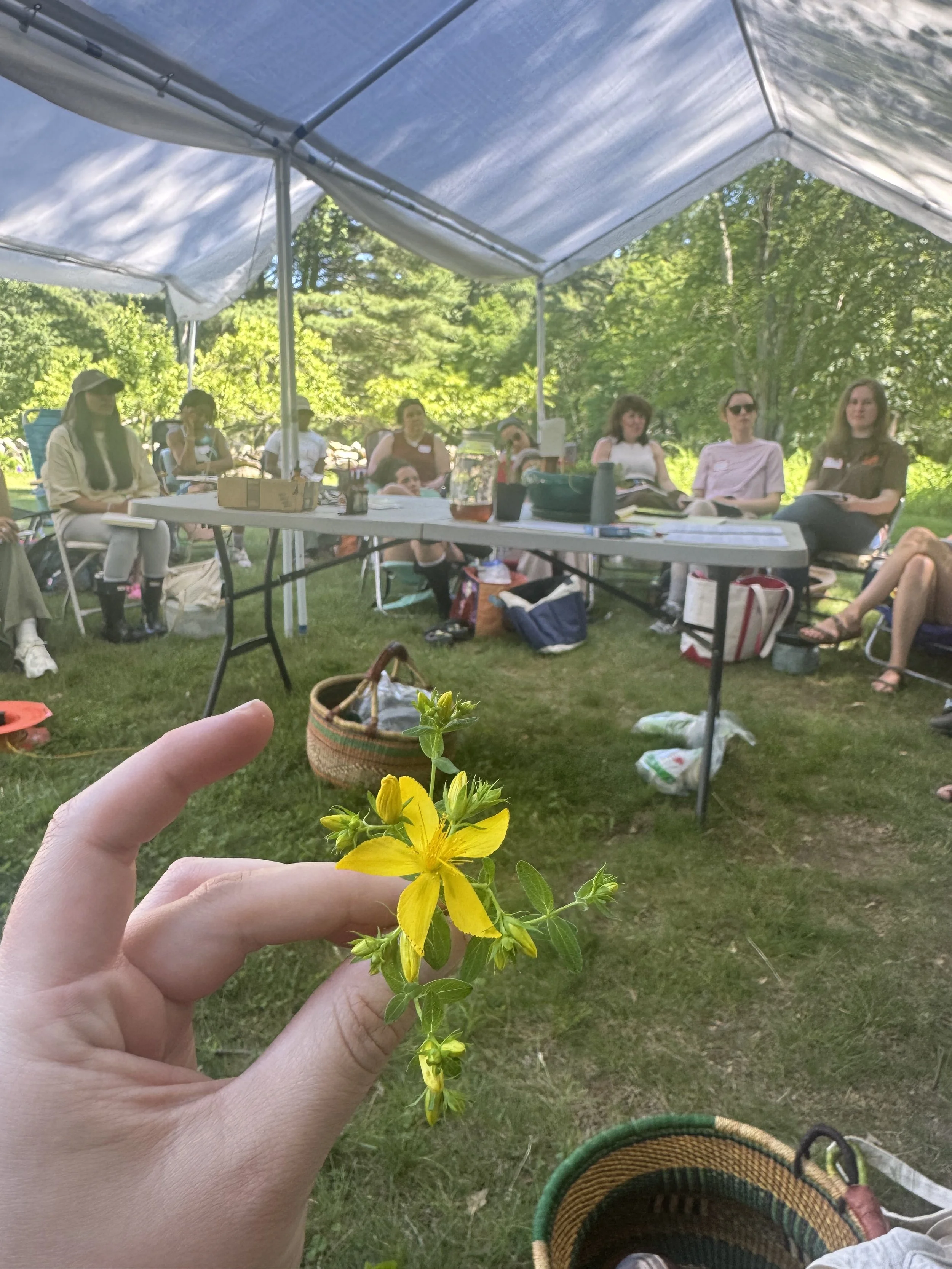
Once we were all settled, we began our discussion on the brain. Rachel wasted no time getting into it (clearly this is one of her favorite topics to teach!). Did you know the brain processes an estimated seventy trillion pieces of information every day? Seventy trillion! Under a microscope, our neurons look almost exactly like tiny trees. (Coincidence? I think not). Just as every tree in the forest is different, so is every brain.
Adaptogens like ashwagandha soothe an overtaxed nervous system, so it isn't trying to sort through all seventy trillion bits of information on high alert. Nervine tonics like milky oats help strengthen and tonify the nervous system over time, while lemon balm and passionflower work more like a dimmer switch, easing insomnia and calming muscle spasms in the moment. St. John's Wort is a go-to as well, supporting mood and easing nervous tension, with the added bonus of supporting the liver and digestion. Which brings us to the brain-gut connection…
We were shocked to learn that we are technically more bacteria than we are anything else. Our bodies carry around 30 trillion cells, and roughly 38 trillion bacteria live in the gut alone. The gut is extremely influential on brain health. In Ayurveda, the brain is said to reside in the gut, and taste itself is treated as a form of enlightenment. Treat the brain without treating the gut and you are only doing half the job. Stress directly impacts the gut microbiome, so digestive health is brain health. This also explains why most digestive herbs are also nervines; the gut and the brain are in constant conversation, and an herb that speaks to one is usually speaking to both. Herbs like wood betony, lemon balm, and hops all do exactly that in their own unique ways.
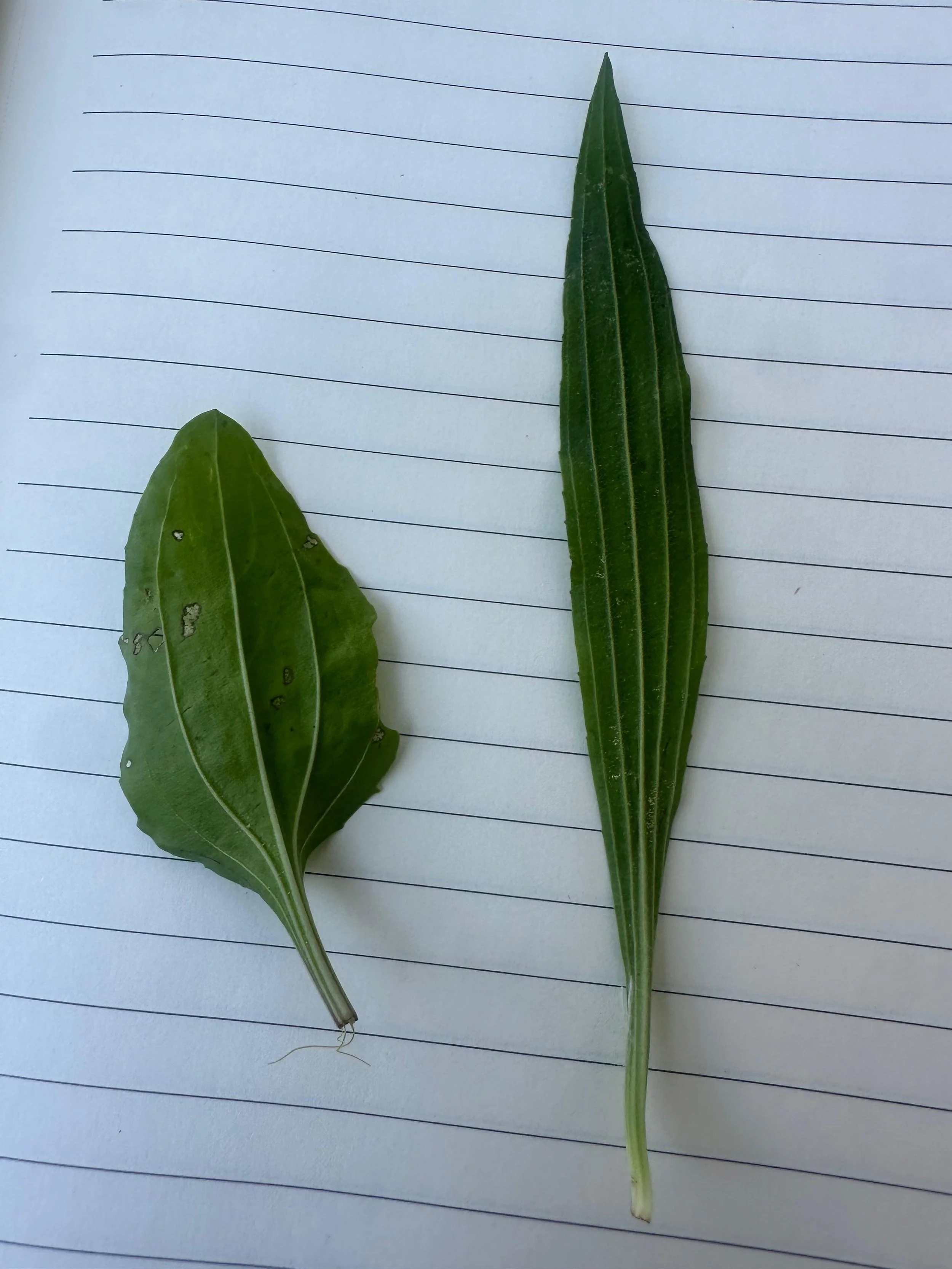
Once the sun waned a bit, we went out to harvest plantain: broad leaf and narrow leaf growing side by side, easy enough to tell apart once someone shows you what to look for. As we turned the leaves into a fresh infused oil, we learned that this plant belongs in every herbalist's first aid kit. Plantain pulls out everything from splinters to bee stings, to the occasional patch of adult acne. Herbal medicine doesn't only work from the inside. Applied topically, oils can carry a plant's constituents deeper into the tissue than you'd expect.
Sunday morning opened with skullcap tea, made the Appalachian way: dried herb simmered for hours in a gallon of water until reduced. Skullcap is an incredible remedy for insomnia, nervous tension, and exhaustion. This method smoothed out the bitterness and made the herb’s flavor special almost like the fine wine equivalent of herbs.
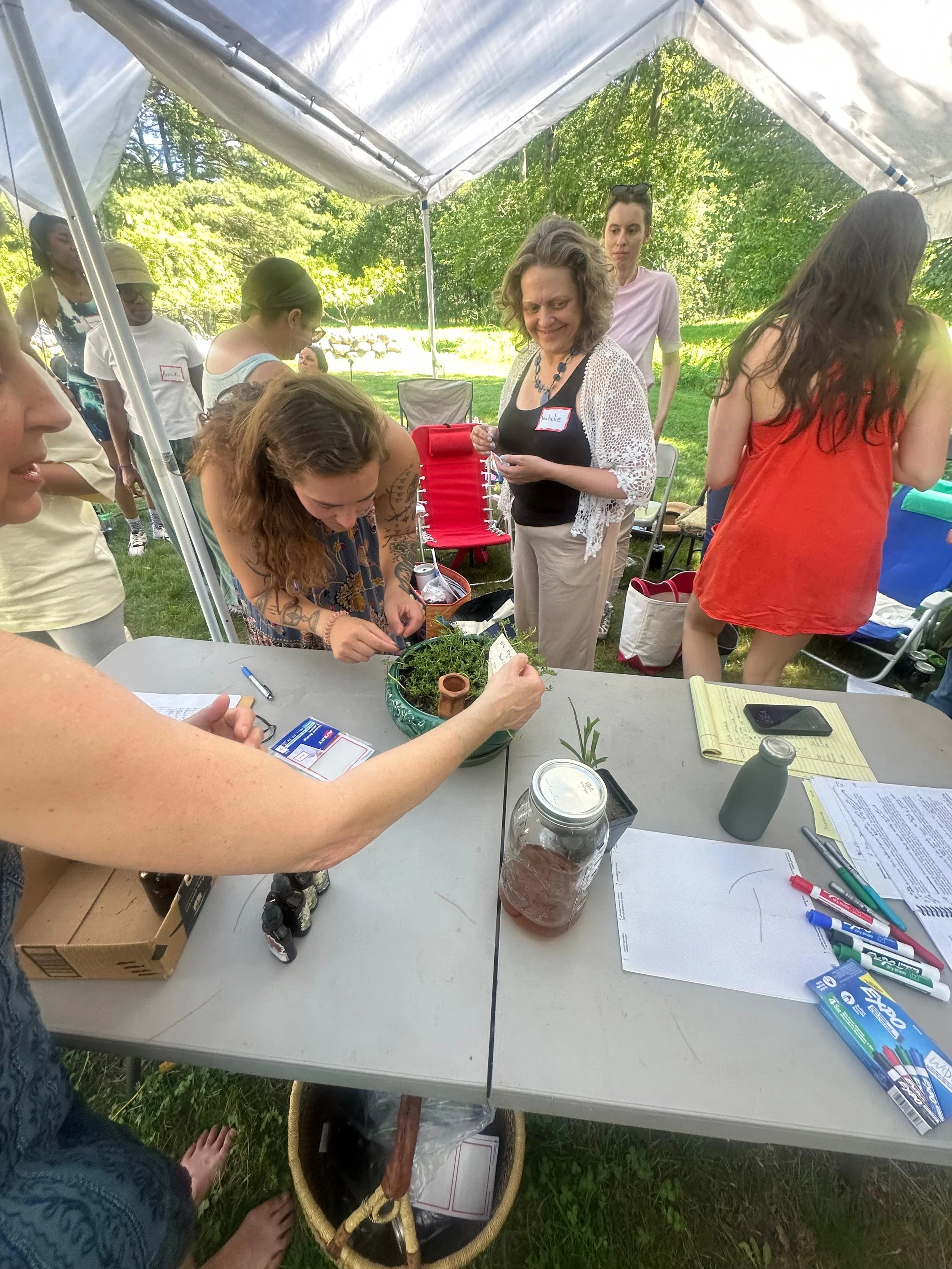
Madelon walked us through formulation, and it was almost immediately clear this is about far more than simply throwing a few herbs into a cup. Part of the healing is in the making of the tea itself, in the slowing down it asks of you before you've even taken a sip. There is medicine within the ritual itself. We spent the rest of the hazy afternoon tasting nervines, and most of them, it turns out, taste really good. Maybe the taste is part of the medicine too.
By the end of the weekend, that new cycle the Gemini moon promised didn't feel as abstract anymore. It felt like something we were already standing inside of: the same rose quartz sphere still making its rounds, the same field that held the apprentices before us, holding us now too. That's the kind of thread you don't really notice until you realize you're already part of it, and it will keep moving long after we've handed the stone off to whoever sits in this circle next.
We all slept great that night.
If this resonates with you, the Boston School of Herbal Studies offers a range of programs for anyone ready to deepen their relationship with plants, whether you are just getting acquainted with your green neighbors or have been working with herbs for years. Explore our offerings at bostonherbalstudies.com/education.
