Weed Wisdom: Tightening the Weave
Weeds get a bad rap. They're pulled, sprayed, and cursed at, treated as something to overcome rather than something to get to know. Many of the plants we work hardest to get rid of are among the most nutritious, medicinal, and generous plants on earth. This series is a case for looking twice. The weed in your yard might just know something you don't.
When I first started studying herbalism, the instructor assigned each of us a plant ally: an herb to work with for the entirety of the year-long program. We went around the table, pulling pieces of paper at random out of a basket. I chose yarrow. Or I suppose yarrow chose me.
I’d quickly learn that this unfamiliar plant and I were quite a complementary pair. Or rather, that I needed her more than I realized.
I had just moved to somewhere new where I knew basically no one. I had also started a new job, where I found myself in a healing role often taking on the energy of others. I was overstimulated, overly empathetic, and my menstrual cycle felt like a gift from Satan himself.
Enter yarrow.
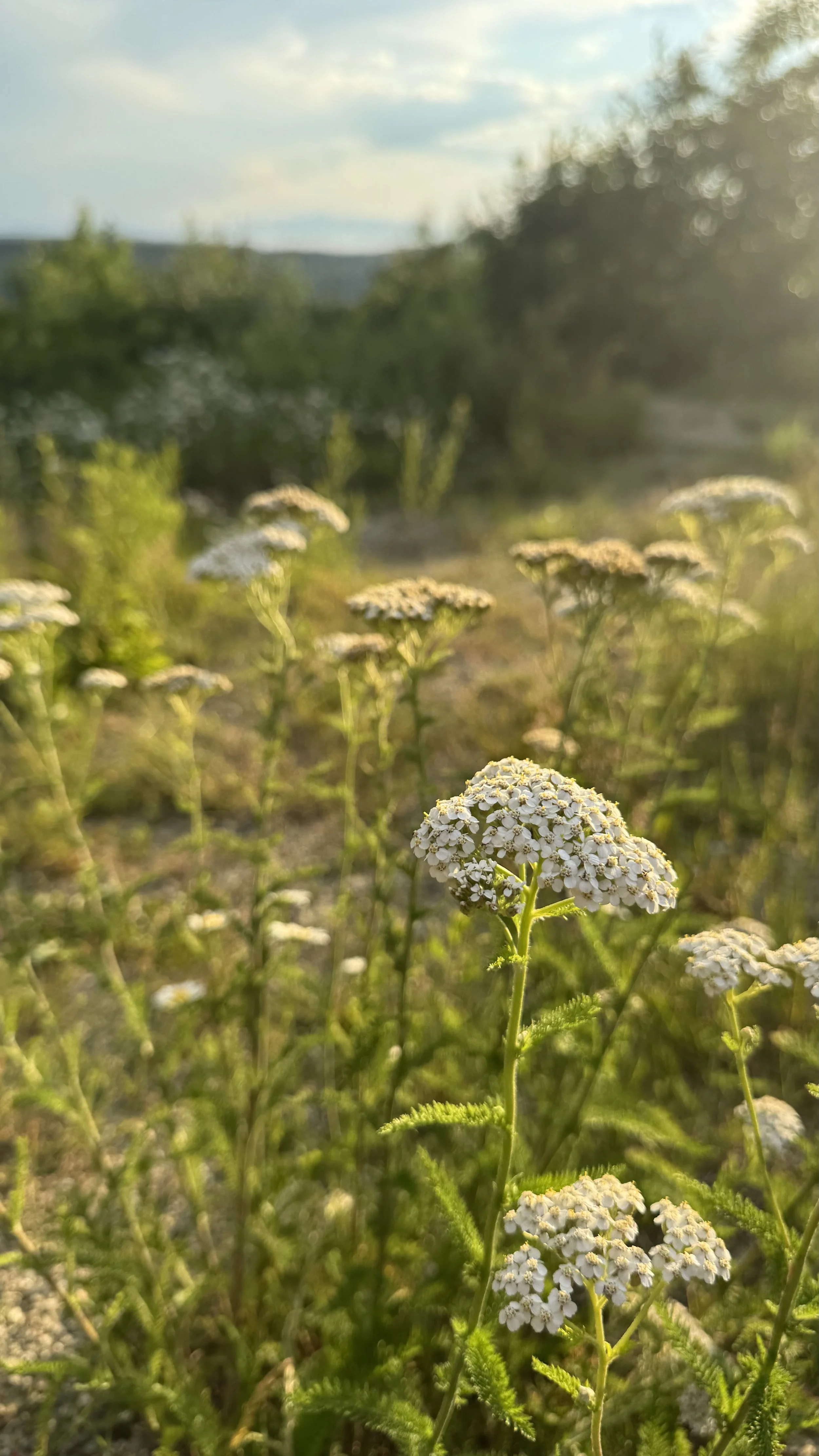
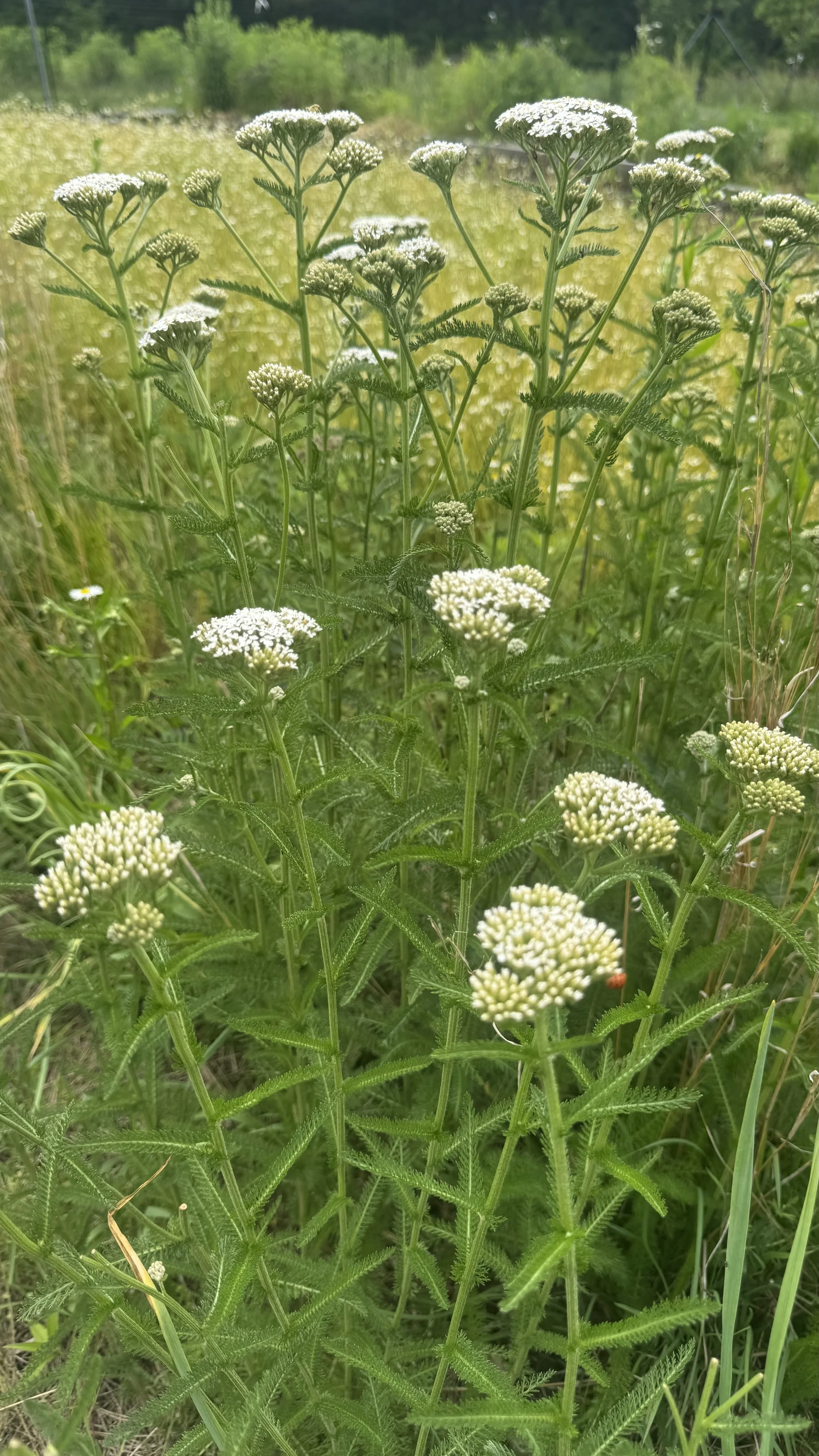
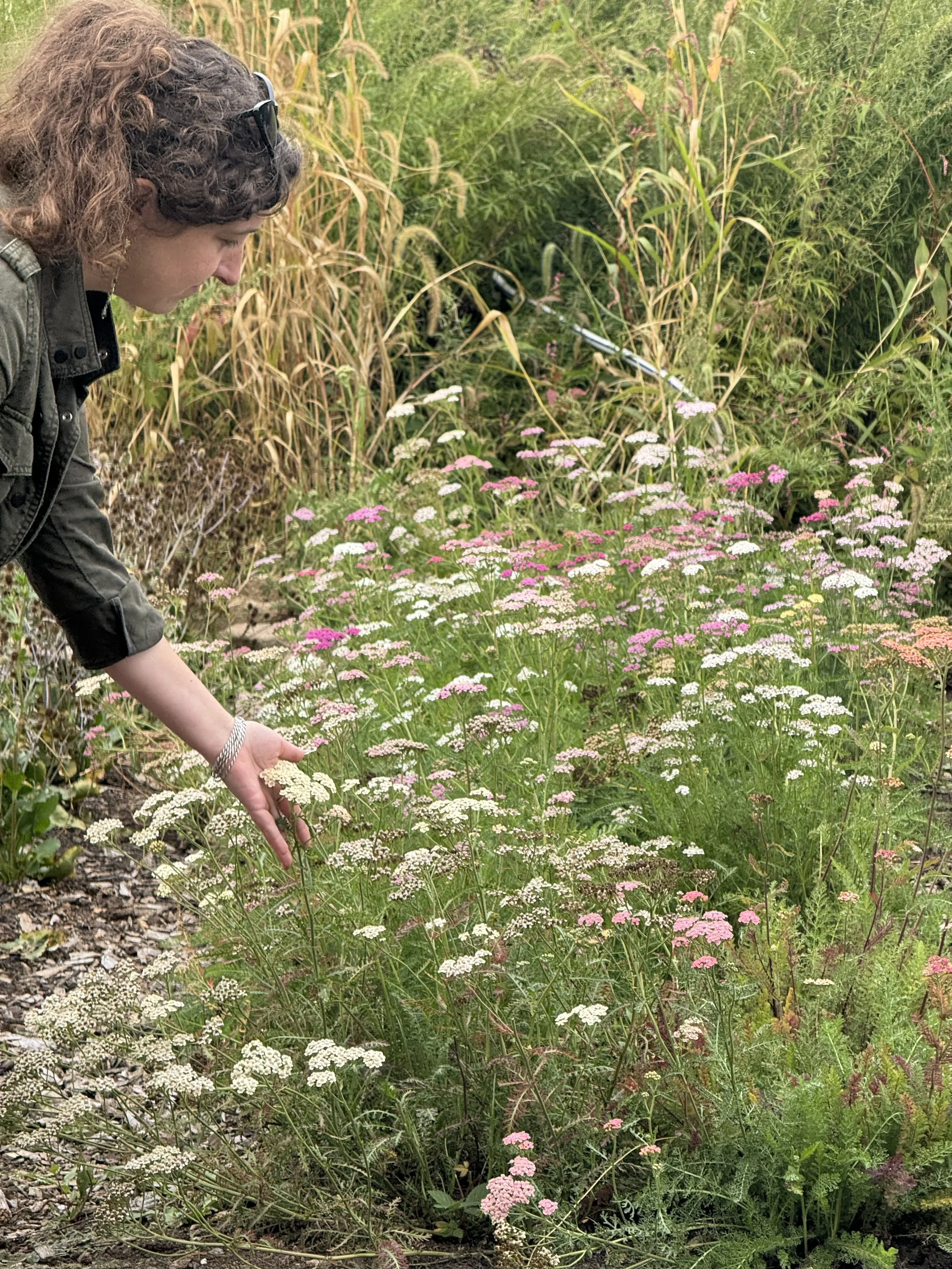
Yarrow is an upright, hardy perennial with soft, feathery, fern-like leaves and dense, flat-topped clusters of tiny, daisy-like flowers, typically white with a yellow or pink twinge (though some ornamental/non-medicinal varieties may be more colorful). The leaves curl over in a way that resembles a squirrel's tail (she's actually referred to as “squirrel tail” in Ojibwe).
People have been in relationship with yarrow for thousands of years. Achillea millefolium is best known as an ancient wound remedy, and her name carries many stories along with it. In one telling, Achilles' mother dipped him in a yarrow bath instead of the River Styx, trying to protect him from harm. In another, the centaur Chiron taught Achilles how to make yarrow ointment to heal his soldiers' wounds on the battlefield.
She is a bitter, pungent, warming and drying herb. Yarrow stops hemorrhaging and breaks up congealed blood at the same time. Ask any herbalist and they most likely will have their own story of reaching for yarrow after a gnarly cut and watching the bleeding stop remarkably fast.
She's also one of the best herbs for excessive menstrual bleeding and uterine congestion. Yarrow played a significant role in making my cycle stop feeling like such a punishment each month. Her hemostatic action reins in the heavy flow, while her anti-spasmodic action eases the cramping that comes with it, and her circulation-boosting properties help move the congestion. She's also anti-inflammatory and a bitter tonic, and a potential life saver to have on hand while hiking or out in nature.
Just as yarrow tightens the weave of our bodily tissues, she's said to tighten the weave of our aura, forming a boundary of protection and keeping it from merging or blending unhelpfully with someone else's. She offers emotional protection to people who are sensitive in overstimulating environments, cleanses the auric field, and is said to help with difficult conversations. She carries ancestral wisdom for strength, courage, and protection, and helps prevent spiritual leakage and overextension.
As a highly sensitive person (who tends to not need first aid intervention often, knock on wood), I resonate deeply with the energetic qualities of yarrow. Working in a healing profession, I found myself getting lost in other people's energy often. I tend to obscure where I end and others begin. Physically, her astringent action tightens and protects healing tissue. Energetically, I feel a similar action, forming a shield against energies that aren't mine.
Yarrow is bitter as a tea (great as part of a blend or bitters formula) and even better as an oxymel, a vinegar and honey mixture. I love mine mixed into cocktails or mocktails. The tincture, salve or powdered herb belongs in every first aid kit. Yarrow is a lovely herb for baths, rinses, soaks, and steams. Place a few fresh sprigs on your car’s dashboard, your altar, or anywhere you’d like protection. As a flower essence, she's used to heal generational trauma, a fitting extension of everything she does for the physical body.
Things have changed since we first met, but yarrow is still a dear plant ally, my first, and still a frequent friend. I see her everywhere now: growing wild on the farm, all over trails in Maine, even along the roadside in Iceland. It feels like this plant has been following me, reminding me not to lose myself, to protect my energy, and to not let the boundaries between myself and others blur too much.