
This is the fifth installment in a series following one student's journey through the Level I Herbal Apprenticeship at the Boston School of Herbal Studies. Each month, we'll share a dispatch from the farm: what we're learning, what's growing, and what the plants have to say. Follow along. To learn more about the apprenticeship, visit bostonherbalstudies.com/education.
We are in the so-called dog days of summer. The days still feel long, but there is a sense that time is limited, and we soak in the last of the extended sunlight before fall sweeps in. Earlier this week, a solar eclipse in Leo, the sign of the heart, cracked things wide open.
This session, we went deeper into the more subtle energetic layer. Plants heal not just physically, but on emotional, spiritual, and energetic levels as well. They heal in so many ways, perhaps most profoundly in the ways we don't fully understand. Which brought us to flower essences.
Flower essences are a form of energy medicine that engages the energy fields surrounding our bodies and stimulates an inner dialogue with hidden aspects of the self, bringing a greater sense of psychological awareness. They help us meet the challenges of physical and emotional pain and suffering. They support our evolution at a soul level.
We were intrigued. Which plant would we journey with? Tommy gazed around, and paused with a look of certainty on his face. There was Joe Pye Weed, standing proud at the edge of the field with its whorled pink-purple flowers dancing in the breeze. She is sometimes referred to as the Queen of the Meadow, as she reigns over streams, swamps, fields, and marshes in the late summer. Also known as Gravel Root (Eupatorium purpureum), this herb is renowned for its ability to expel stones from the urinary tract. It adjusts the balance between the fluids and the solids of the body.
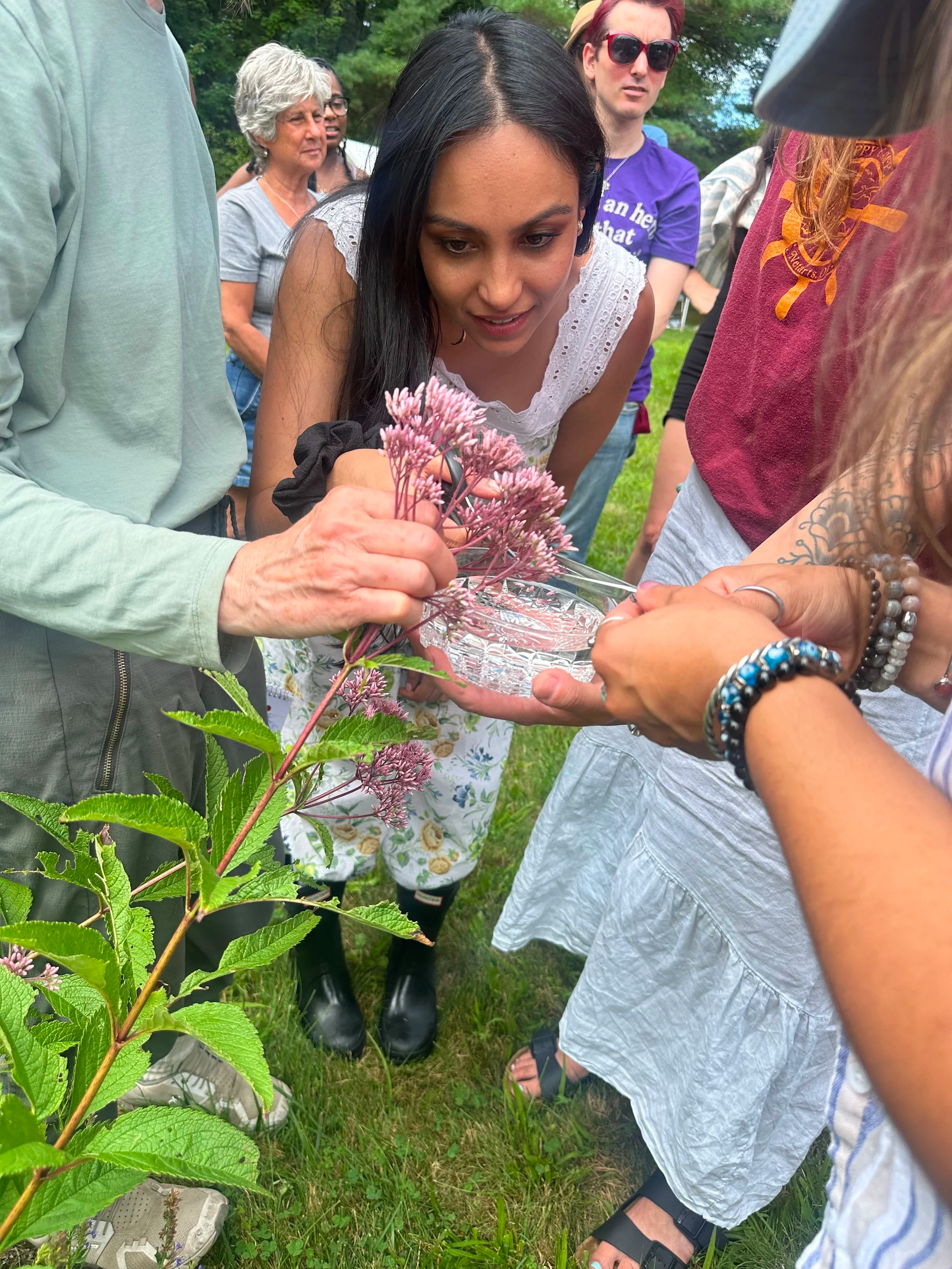
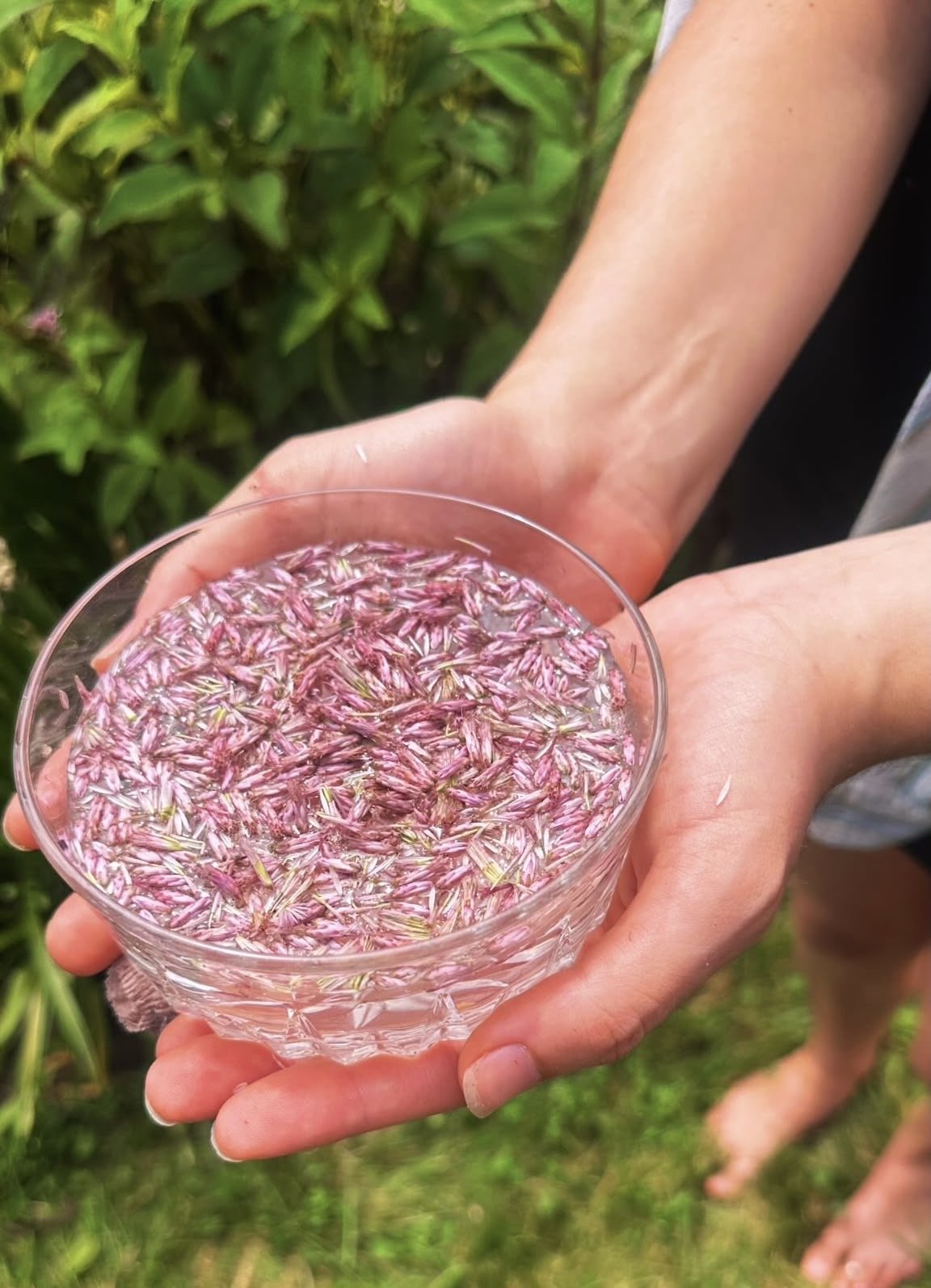
After making an offering to Joe Pye and inviting her to be an ally, we prepared our flower essence, taking turns carefully plucking the flowers into a crystal bowl filled with water. Once her petals filled the surface of the water, we left the bowl at the base of the plant to infuse in the sun for a few hours.
While the bowl soaked up the sun, we learned about Edward Bach, who first developed flower essences in the 1930s. A homeopath and bacteriologist, Bach left his practice to develop a new system of healing based on the energies of wildflowers. He understood that subtle energies may make the deepest and most profound changes in the human soul and body.
After a few hours, we were ready to finish our essence. We removed the flowers from the bowl and poured the water into a bottle with brandy, which preserves it much like the alcohol in our tinctures, to make the Mother Essence. From the Mother, we added several drops into another bottle of distilled water and brandy to create the stock bottle.
Now, we were ready for our plant journey. We each held the bottle in our hands and took a few drops of the flower essence, and then began the ceremony. Sitting in a circle, eyes closed, listening to the steady beat of Tommy’s drum. I’m not exactly sure how much time passed, as it felt like a small eternity and the blink of an eye. After a while, the chanting and drumming stopped and we sat in silence.
Plant journeys are a deeply personal experience, and everyone has their own takeaway. Many commented on a strong feminine authoritative figure (like a mother) watching over them. Some met resistance connecting with her, waiting for some profound realization that never arrived. Others danced with or alongside her. Some simply sat at her feet, slightly befuddled and awestruck.
For me, this was a reminder that some things simply cannot be explained in words. Not everything is meant to be “figured out,” but rather held and witnessed. The pinkish purple flowers appeared in my mind’s eye, reminiscent of a womb, reminding me not to grasp so tightly.
The energetics of the plants are the undercurrent of this entire apprenticeship. We know the subtle qualities are there, yet we often find ourselves focused on the tangible, as humans tend to do. This weekend, the unseen took center stage. Last month, the roots we'd been building were approaching the surface. With Joe Pye in full bloom, it felt like the buds had finally opened. As we return to the farm each month, our relationship with Mother Earth herself keeps deepening, one layer at a time.
Day two began with a sharing circle that held space for many big shifts and a deeper integration of the plants into our daily lives. The stories started with the sunset. The evening before, I couldn't help but notice the pink and purple hues in the sky, and I wasn't the only one. Others had noticed the same color at dinner, and one student had looked out the window beyond her kitchen and realized there was a huge field of Joe Pye waving at her.
Next, we were in for a lighthearted day covering the reproductive system with Linda. Did you know that the liver plays a significant role in reproductive health? The liver breaks down excess hormones, so a sluggish or congested liver can struggle to clear excess estrogen, which may contribute to premenstrual discomfort. Something to keep in mind the next time PMS shows up. It's also one more reason the bitters from our first session, like dandelion and burdock, keep earning their spot in the teapot.
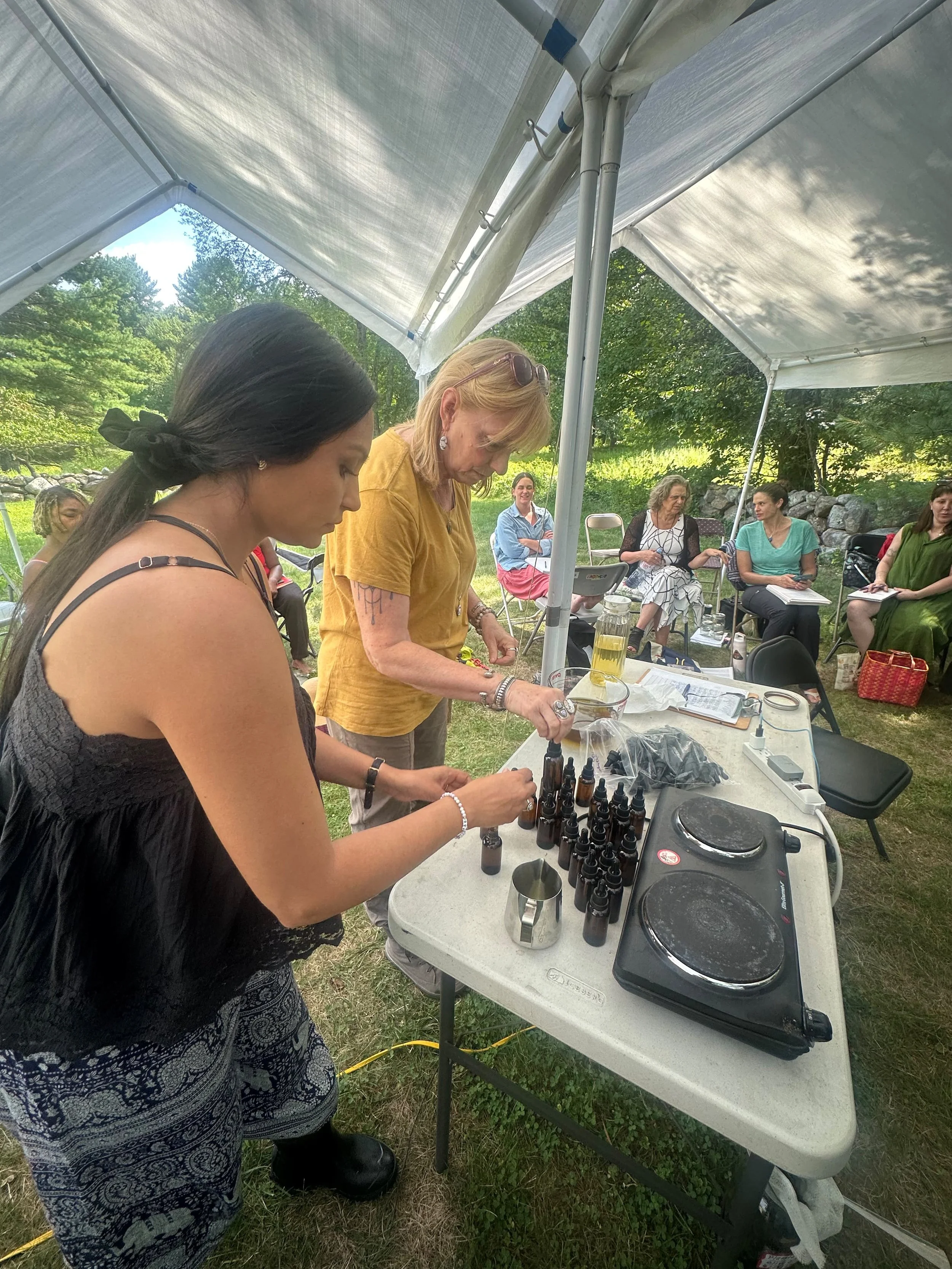
We spent the afternoon making herbal aphrodisiacs and massage oils. The circle filled with laughter as we blended our concoctions, our hands sticky with honey. As we get deeper into our studies, it can be easy to get stuck in the seriousness. This was a necessary reminder that herbalism doesn't have to be so serious. It's messy, and we can have fun with it. Joy is medicine too.
If this resonates with you, the Boston School of Herbal Studies offers a range of programs for anyone ready to deepen their relationship with plants, whether you are just getting acquainted with your green neighbors or have been working with herbs for years. Explore our offerings at bostonherbalstudies.com/education.
