
Notes from the Farm: Part One
This is the first installment in a series following one student's journey through the Level I Herbal Apprenticeship at the Boston School of Herbal Studies. Each month, we'll share a dispatch from the farm: what we're learning, what's growing, and what the plants have to say. Follow along. To learn more about the apprenticeship, visit bostonherbalstudies.com/education.
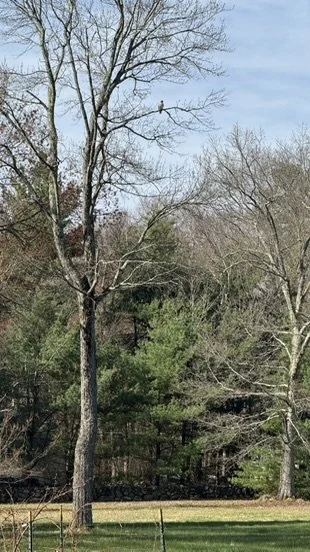
Spring is here. The birds are getting louder; the sun lingers a little later each evening, and the first plants are breaking through the soil. Nettles are unfurling their jagged leaves along the field edges. Cleavers are threading themselves through the hedgerows. Down along the stream, skunk cabbage is doing what skunk cabbage does: emerging from the muck in stubborn abundance. A red-tailed hawk has claimed the highest branch of a maple tree as her own, watching all of it with the patience of someone who has seen many springs come and go.
After a long winter of anticipation, the Level I Herbal Apprenticeship has begun.
One by one, our newest cohort of herbal apprentices made their way to a circle of chairs set up beneath the large tent, smiling ear to ear. The circle filled quickly: a mother and daughter learning together, nurses and other healthcare professionals, energy workers, artists, people who had been quietly growing herbs in their backyards for years and people just getting acquainted with their plant neighbors. The morning birds were busy at the feeders nearby, and as the group settled, the circle erupted into similar chatter: overlapping, warm, slightly giddy.
Within minutes, we weren't strangers anymore. We were twenty-five people bound by the same pull: a desire to slow down, to reconnect with the earth, and to learn the medicine that has been growing right outside our doors all along.
It's going to be a good year.
The morning opened with something reminiscent of a show-and-tell. Jars and tincture bottles were passed around the circle, and one by one we felt, smelled, tasted, and sat with the herbs. This is one of the first things herbalism teaches you, and honestly one of the most delightful: it is not an abstract practice. It lives in the body. You learn it through your senses before you learn it through your mind.
The proof was immediate. Schisandra berries made their way around the circle, small and red and unassuming. I liked the bright, centering tartness that made everything feel a little more awake. The student next to me absolutely did not, her face puckering into an expression of theatrical betrayal that made the whole circle laugh.
What we were experiencing, without quite realizing it yet, was herbal energetics in action. In herbalism, the taste of a plant is not incidental. It is a clue. Schisandra is one of the rare herbs that carries all five tastes: sour, sweet, bitter, salty, and pungent. That puckering, drying sensation my neighbor felt? That is the sour taste doing exactly what sour does: astringent, contracting, gathering energy inward. Part of what this apprenticeship teaches, I am already discovering, is how to pay attention to what the body already knows.
Herbs have always had something to say; we are just learning how to listen.
Understanding an herb's energetics is one piece of the puzzle. Another is understanding its actions: what it actually does in the body, which organ systems it gravitates toward, and why. This is the framework herbalists call herbal actions, and it is one of the foundational lenses of the apprenticeship.
Enter stinging nettle.
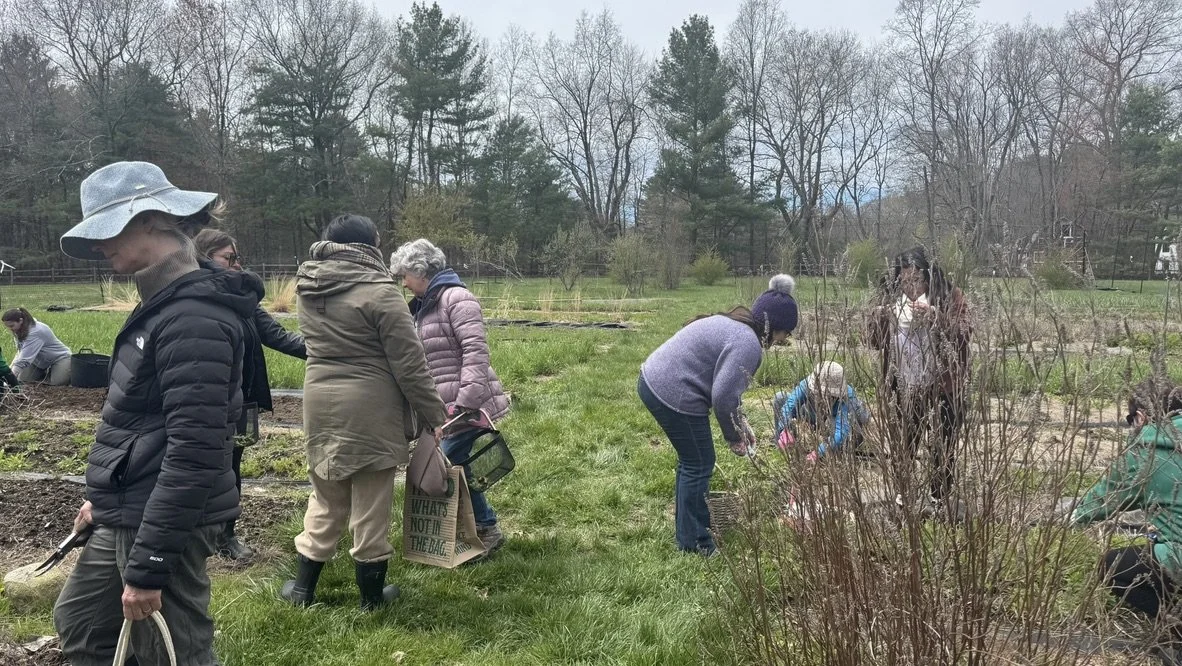
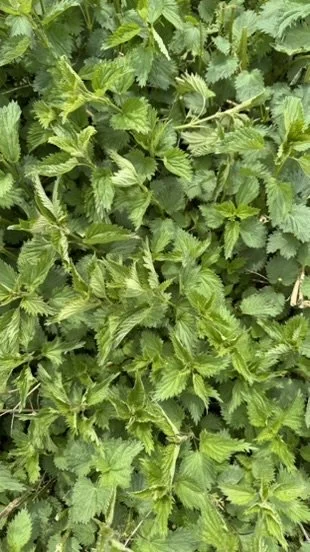
Nettle is one of those plants most of us have already had a relationship with before we ever study herbalism, usually an involuntary one. That sting comes from tiny hollow hairs along the stem and leaves that break on contact and release compounds that cause that sharp, immediate burn. Several students discovered this firsthand while harvesting, brushing their bare hands against the leaves out of sheer curiosity, then exclaiming with a wince of equal parts pain and delight. There is something almost initiatory about a nettle sting.
For a plant that introduces itself so aggressively, nettle turns out to be extraordinarily generous. Nettle is extraordinarily high in protein, vitamins, and minerals including calcium, iron, potassium, and magnesium. Its taste is sweet, salty, and mineral-rich. It is a nutritive tonic, an alterative, a diuretic, and a circulatory stimulant. It supports the liver and kidneys, helps clear uric acid, balances blood sugar, and has been used for low blood pressure, hypothyroid issues, allergies, and eczema.
Nettle emerges in the spring, right as seasonal allergens begin flooding the air. The problem and the medicine arrive together. Herbs live in and adapt to the same environmental stresses and niches that correspond to our own problems. Often the medicine we need most is already growing nearby, coming up through cracks in the sidewalk, threading along hiking trails, or popping up at the edge of a field.
(One note of caution: avoid harvesting from roadsides or areas with a history of chemical use. Plants absorb what surrounds them.)
The second half of the weekend brought us to digestion.
Did you know that approximately seventy percent of digestion is meant to occur in the mouth? And did you know the recommendation is thirty chews per bite? (Thirty!) Most of us did not, judging by the chorus of groans that followed.
At lunch, we tried it. The results were humbling. Most of us made it to somewhere around ten before our minds wandered back to the conversation. It turns out that slowing down, even at the most fundamental level, is often quite difficult
But the reason it matters is worth sitting with. Chewing triggers the salivary glands to release enzymes that begin breaking down food before it ever reaches the stomach. It signals the rest of the digestive system to prepare: the stomach to release acid, the pancreas to ready its enzymes, the liver to increase bile flow. When we eat quickly, we shortcut this whole cascade. The downstream effects: sluggish digestion, gas, poor nutrient absorption, the mid-afternoon slump we blame on everything else- are the body trying to compensate for a job that got skipped upstream.
This is where bitters come in. Bitter is not a taste most of us seek out, but it may be one of the most therapeutically important. Cultures around the world have long used bitter herbs and foods to support digestion: the Italian apertivo before a meal, the digestivo after, the long tradition of bitter herbs in Chinese medicine. Bitters stimulate the salivary glands, prompt the stomach to release hydrochloric acid, encourage the pancreas to secrete digestive enzymes, and increase the flow of bile from the liver.
Some of these you may have already encountered without realizing it: dandelion leaves in a spring salad, arugula on a pizza, radicchio tucked into a grain bowl.
Madelon then walked us through making tea: infusions and decoctions, the two foundational methods of herbal preparation. Into the pot went dandelion, chicory, burdock, sarsaparilla, ginger, licorice.
While the herbs steeped, Tommy and Linda led the group out across the farm to identify what was growing. Mullein in its first-year rosette, its broad silver-green leaves spread low to the ground like an open hand. Garlic mustard along the edges of the field, invasive and a little cheeky, with a sharp pleasant bite. Cleavers threading through everything, their sticky stems catching on sleeves and pant legs as if to say, take me with you. And nettles: still young enough to harvest, their leaves bright and vivid, their sting very much intact.
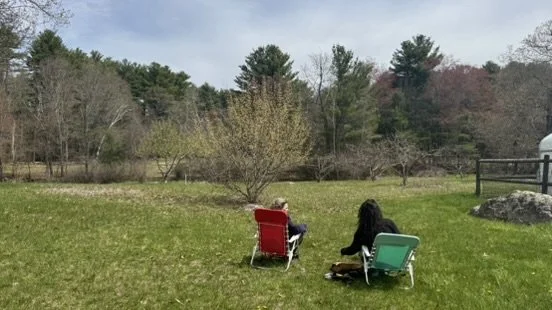
We came back to find the tea ready. We poured and passed and sat together in the fading light, the smell of herbs rising from our cups. Before sending us home, Madelon offered an invitation rather than an assignment: go play. Experiment with herbal combinations. Trust what smells right, what tastes right, what your body responds to. Begin building your senses.
As the sun approached the horizon, we said our goodbyes: baskets of fresh herbs in hand, smiles on our faces, heading out into that late afternoon golden hour as the light moved across the fields.
Perhaps all we need is already here, right outside our door.
If this resonates with you, the Boston School of Herbal Studies offers a range of programs for anyone ready to deepen their relationship with plants, whether you are just getting acquainted with your green neighbors or have been working with herbs for years. Explore our offerings at bostonherbalstudies.com/education.
