
Weed Wisdom: Stinging for Attention
Weeds get a bad rap. They're pulled, sprayed, and cursed at, treated as something to overcome rather than something to get to know. Many of the plants we work hardest to get rid of are among the most nutritious, medicinal, and generous plants on earth. This series is a case for looking twice. The weed in your yard might just know something you don't.
I recently had dinner with a friend. "I had to stop gardening because of the nettles, it really hurts and they're everywhere!" she exclaimed, blowing her nose. "Sorry, my allergies have been extra bad this year," she sniffled.
Ironically, the medicine we need most is often right outside our door, practically banging it down. Nettle is doing the closest thing a plant can do to yelling at you. With that sting, it is trying its absolute hardest to get your attention.
Maybe it's time we listened.
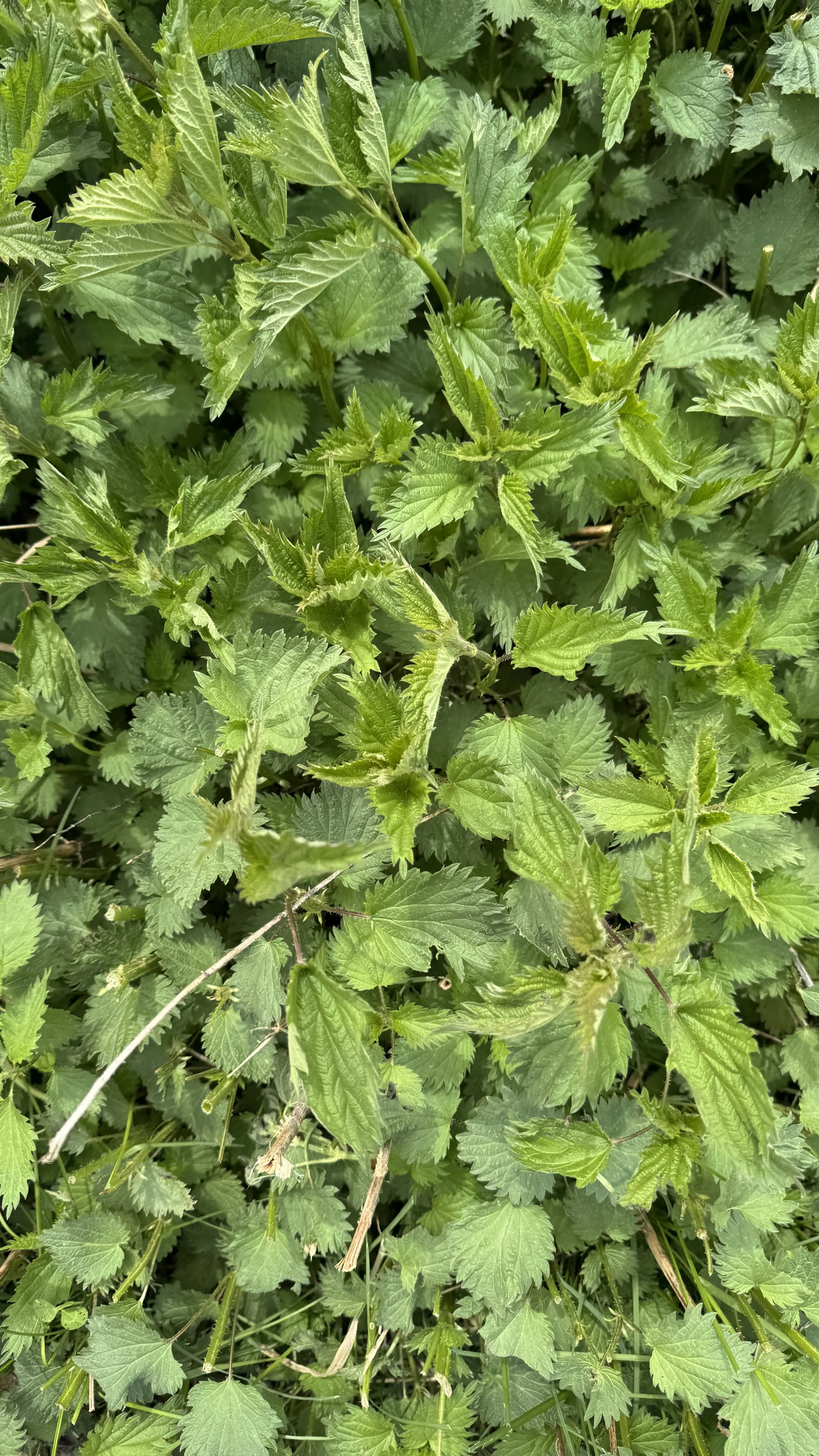
Stinging nettle (Urtica dioica) is a perennial plant with toothed, oval leaves and square stems covered in fine, bristly hairs that deliver a sharp sting on contact. You've probably seen it growing in disturbed soil, along fence lines, at the edges of gardens. It likes rich, loose ground and it spreads freely, which is exactly why so many gardeners wage war against it.
But herbalists see something else entirely. They see one of the most nutritious, versatile, and broadly useful plants in the northeastern landscape.
Nettle is, first and foremost, food. The leaves are extraordinarily high in protein and rich in minerals including calcium, phosphorus, potassium, iron, silica, copper, and sulfur. They're a strong source of vitamins D and K, and dense in chlorophyll. Herbalist Susun Weed has noted that a single quart of nettle infusion contains over 1,000 milligrams of calcium, significant amounts of vitamin A and K, and around 10% protein alongside most B vitamins.
Nettle doesn't work by isolating one active compound and driving it hard in one direction. It works by being deeply nourishing. It is a nutritive tonic, meaning its primary action is to feed and restore the body's own systems rather than override them.
Taste it and you'll understand. Nettle is sweet, salty, and faintly mineral, like drinking something the earth made on purpose. Nettle just feels nourishing.
Back at the dinner table, my friend was exhausted, inflamed, sniffling through her allergies, and completely unaware that the plant she'd been battling all season was exactly what she needed.
Nettle is one of the most well-regarded herbs for seasonal allergies, hay fever, and related inflammation. It reduces histamine response and calms mucus production, making it useful for the kind of wet, sneezy, itchy misery that comes with spring and fall. It's not a one-dose fix. Nettle is meant to be a consistent ally, taken as an infusion daily throughout the season, best started several weeks before allergy season begins.
It also builds blood. For people dealing with fatigue rooted in iron deficiency or anemia, nettle's mineral density makes it a gentle, food-based way to restore what's been depleted. It supports the liver and kidneys, helps clear uric acid from the joints, and can be useful for people managing gout, arthritis, low blood pressure, or sluggish thyroid function.
This is what herbalists mean when they talk about a tonic herb. It's not dramatic. It doesn't work fast. It works the way good food works: steadily, over time, at the level of what your body actually needs.
Note: nettle is contraindicated for people on blood thinners like Warfarin, or medications that depend on stable vitamin K levels. If that's you, check with your provider before consumption.
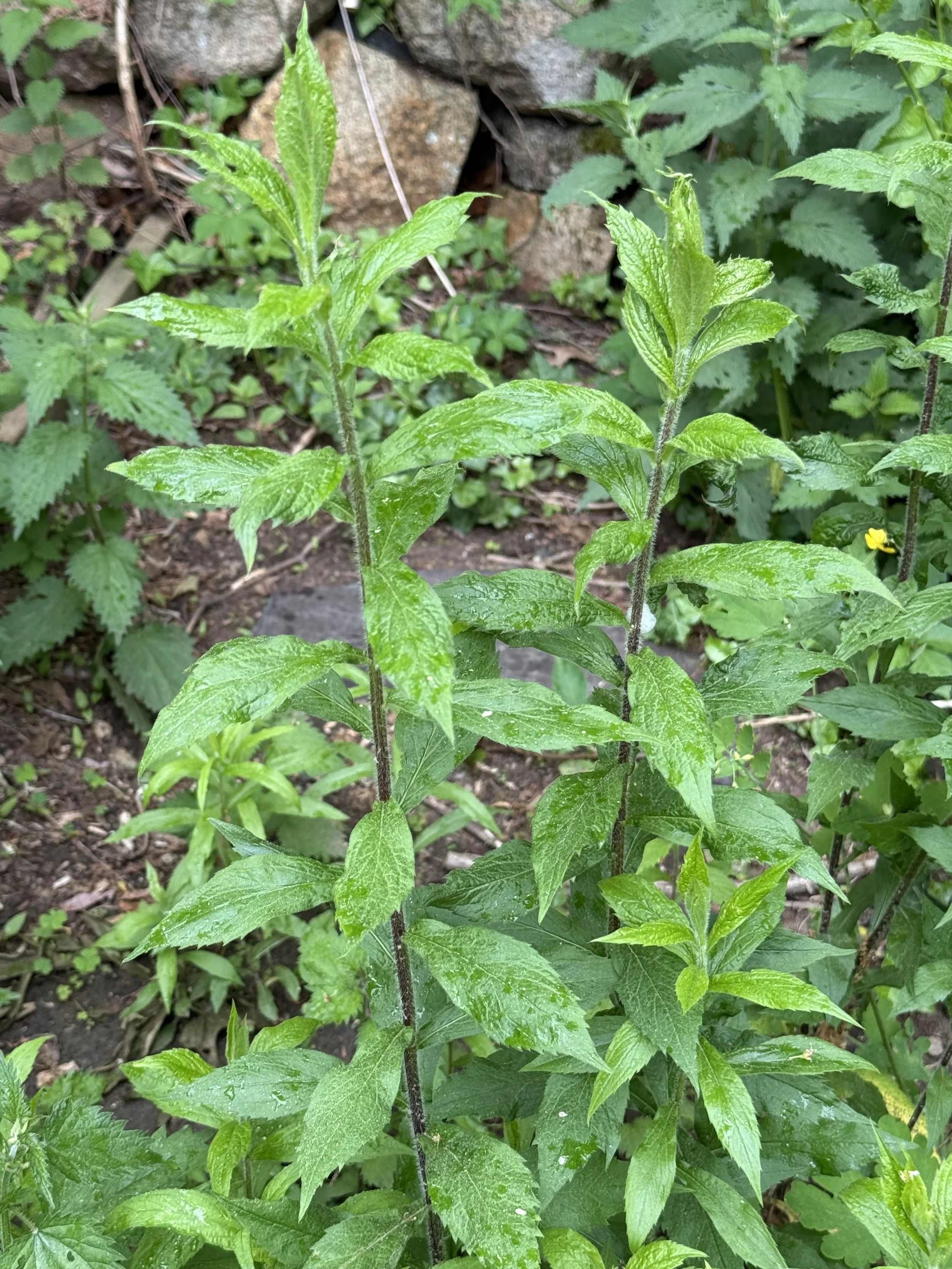
We left dinner and headed straight to her garden. As if it was meant to be, the nettles were at their prime. We pulled on gloves, harvested the young tops before the plant had flowered, when the leaves are at their most tender and nutrition is highest. Once nettle is cooked, dried, or blended the sting disappears entirely, and the leaves can be used in soups, pestos, or sautéed the way you'd use spinach.
Another traditional preparation is a long infusion. Use about an ounce of dried nettle leaf per quart of water, steep overnight, and drink one to two cups two or three times a day. The overnight steep pulls out far more mineral content than a quick cup of tea.
We opted for a vinegar tincture, packing the fresh leaves into a jar and covering them with apple cider vinegar. Vinegar excels at extracting minerals, and minerals are where much of nettle's magic lives.
Nettle doesn't ask much of us. It grows freely, costs almost nothing, and has been used for centuries across cultures as food, fiber, and medicine. What it quietly asks is that we pay attention and look at the so-called weed in the corner of the yard and consider the possibility that it knows something we don't.
Oftentimes the wisdom we need most is right in front of us. Sometimes it's even literally stinging us.
