
Goldenrod (Solidago canadensis)
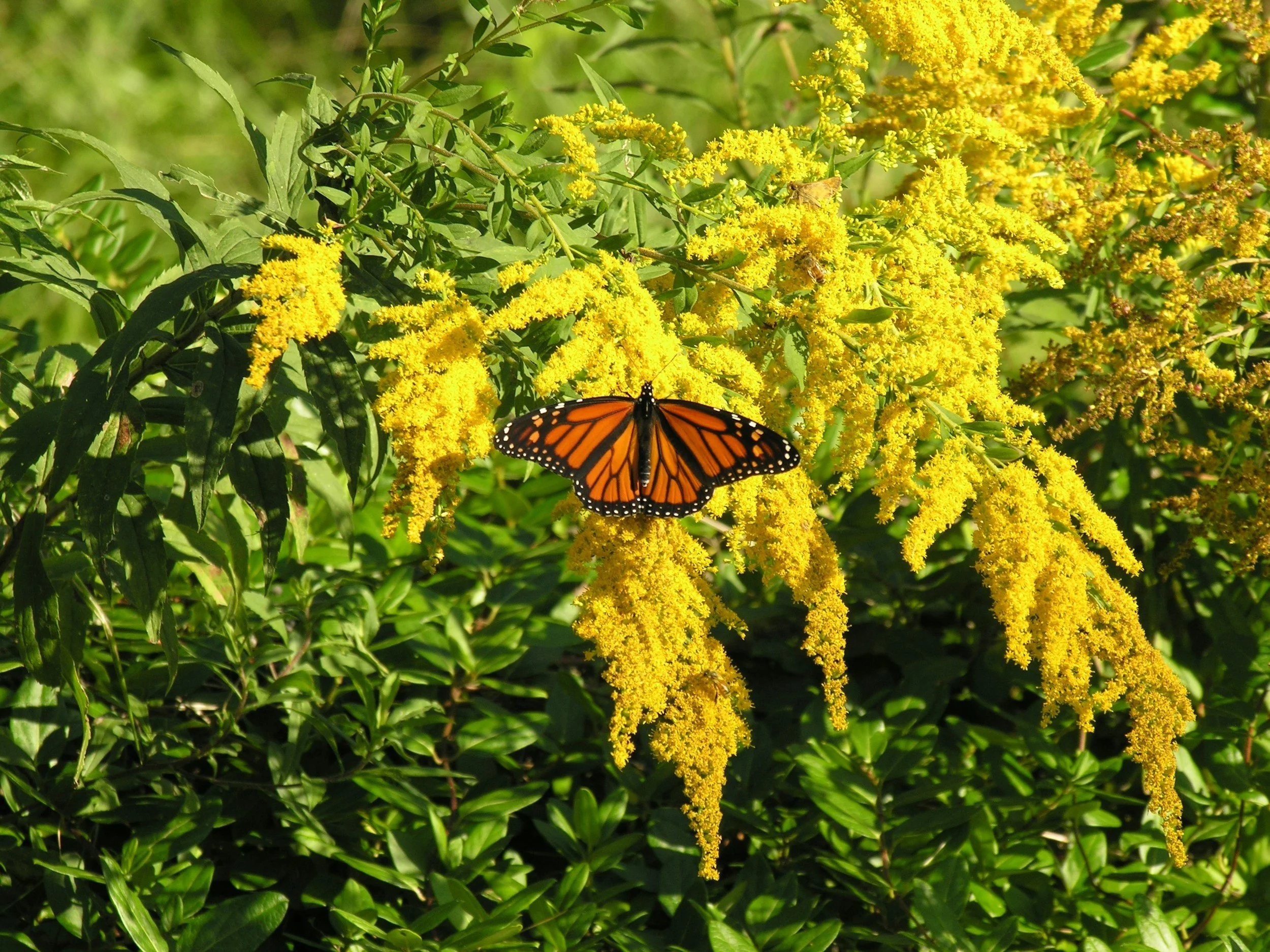
These days, I notice a lot of goldenrod and ragweed (Ambrosia artemisifolia), both now vigorous and abundant in the New England landscape.
In their prime in late summer and early fall, they have their own dance: ragweed is known for inflaming and irritating tissue, causing various allergies, and goldenrod acts to reduce inflammation and diminish allergic symptoms.
Goldenrod is anti-inflammatory, antifungal, decongestant, diuretic, anthelmintic, diaphoretic and antiseptic.
I add goldenrod to yerba santa, ground ivy, plantain and red root when there is sinus congestion with an allergic component.
To prevent and relieve hay fever, Adele Dawson, an old time Maine herbalist, recommended equal parts of goldenrod and red clover infusion with a decoction of elecampane. She suggested taking one cup every day, preferably before the hay fever season begins.
It is a wonderful herb for the kidneys and has a long history of being used for kidney stones.I combine goldenrod with nettles and a tiny amount of licorice for a kidney strengthening tea.
Goldenrod can be combined with corn silk, marshmallow, and uva ursi for urinary tract infections.
The leaves of goldenrod can be infused with cinnamon as a digestive tonic, particularly in the winter, according to the great herbalist, William LeSassier.
As a flower essence, goldenrod is helpful for those who conform to gain social acceptance. It helps us to remain true to ourselves while interacting with others.
Additionally, homeopathic goldenrod is helpful for cat allergies.
Blessings,
Madelon Hope